The shortlist, with today's price
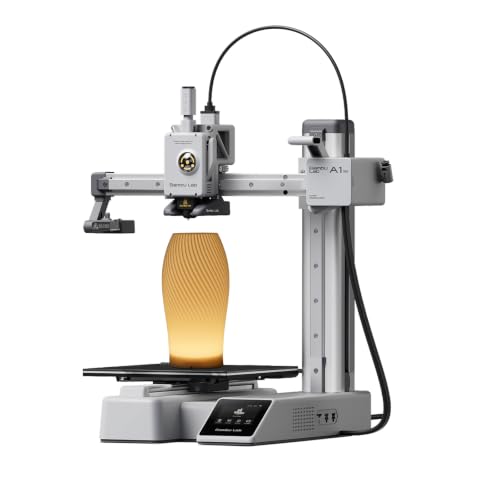
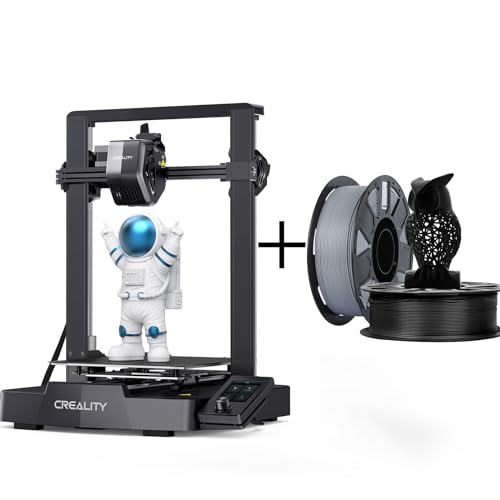
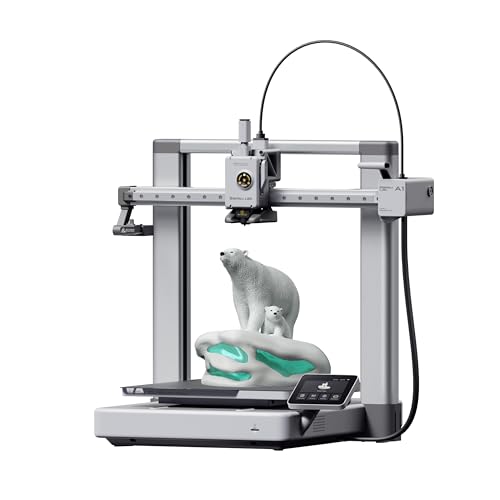
Side by side
| Printer | Path station | Build size | Enclosed | Filament | Price |
|---|---|---|---|---|---|
| Bambu Lab A1 miniBest $200-Tier Pick | 2 A1 mini class | 180 mm cube | No, open frame | PLA, PETG, TPU, PVA | $209.00 |
| Creality Ender 3 V3 SENon-Bambu $200-Tier Option | 2 A1 mini class | 220 mm cube | No, open frame | Not sourced yet | $169.00 |
| Bambu Lab A1Best $300 Upgrade Bed Size | 3 Full-size | 256 mm cube | No, open frame | PLA out of the box; AMS lite adds multi-color | $259.00 |
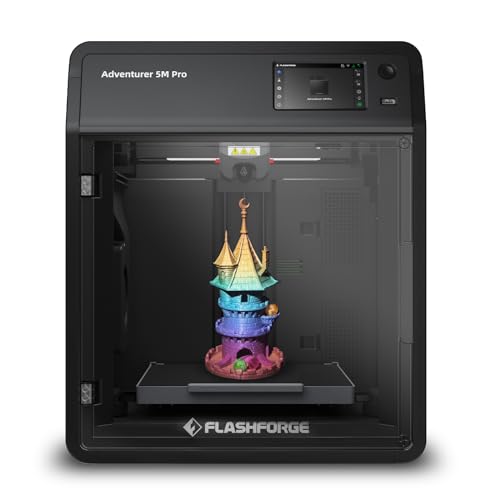 Flashforge Adventurer 5M ProBest $400 Enclosed Pick | 4 Multi-material | 220 mm cube | Yes, HEPA and activated carbon in writing | PLA, PETG, ABS, ASA, TPU, PLA-CF, PETG-CF (TPU and CF on 0.6/0.8 mm nozzles) | $359.00 |
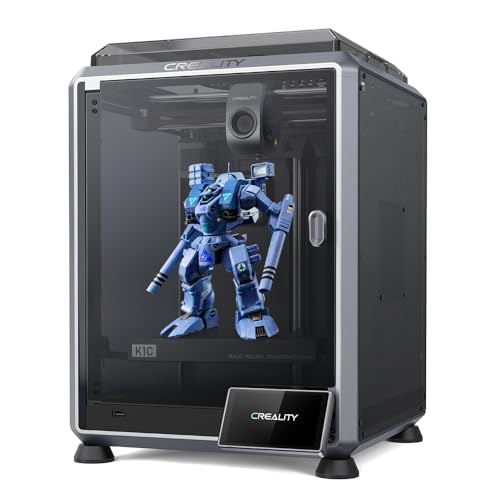 Creality K1CBest $400 Klipper Pick | 3 Full-size | 220 mm cube | Yes, glass door | PLA, PETG, ABS, ASA, TPU; CF filaments out of the box | $369.00 |
Amazon prices as of Nov 23, 2026. Specs from each maker's own page, linked in each pick's build sheet.
Where these printers sit on the upgrade path
- Kid printer
- A1 mini classOutgrow first: build size and enclosureBambu Lab A1 miniCreality Ender 3 V3 SE
- Full-sizeOutgrow first: multi-color and multi-material workBambu Lab A1Creality K1C
- Enclosed multi-materialOutgrow first: rarely outgrown by a home beginnerFlashforge Adventurer 5M Pro
Stations follow build size, filament range and enclosure from each maker's spec page. The whole path
Each pick, and when you'd outgrow it
Bambu Lab A1 mini
The $200-tier printer to start on, unless you already know you need a bigger bed or an enclosure.
$209.00 at Amazon, as of Nov 23, 2026
- Build size
- 180 mm cube
- Enclosed
- No, open frame
- Filament
- PLA, PETG, TPU, PVA
You'll outgrow it when a print is bigger than 180 mm on any side, or needs a filament outside Bambu's ideal list (PLA, PETG, TPU, PVA).
Ownership checks
- Cloud and firmware · Know this
- Recalls · Clear
- Spare parts · Not checked
Full build sheet
Best for: A low-risk first Bambu printer for testing the hobby
- Auto bed-leveling and calibration out of the box, per its own listing
- One owner bought it after a $99 printer plus $80 in upgrades never printed well
- Smaller build plate than the $300-400 tier below
- No multi-color printing without adding the separate AMS lite
Year-one starter spend
| Printer | $209.00 |
|---|---|
| 4 kg of PLA | $41.48 |
| Filament dryer | $38.24 |
| Tool kit | $17.99 |
| Starting total | $306.71 |
Amazon prices as of Nov 23, 2026, add-ons from our gift guide. 4 kg of PLA is a starting stock, not a year's use. No sourced price yet for spare nozzles or build plates.
Path and specs from: Bambu Lab: A1 mini tech specs
Creality Ender 3 V3 SE
The pick if you want a non-Bambu machine with a full-size bed and the least setup work.
$169.00 at Amazon, as of Nov 23, 2026
- Build size
- 220 mm cube
- Enclosed
- No, open frame
You'll outgrow it when a print needs an enclosure or ABS, ASA or carbon-fiber filament — this is an open frame listing PLA, PETG and TPU(95A) — or more than the 220x220x250 mm cube.
Ownership checks
- Cloud and firmware · Not checked App or account requirement not checked yet
- Recalls · Not checked CPSC recall check for Creality not done yet
- Spare parts · Not checked Spare-part availability not checked yet
Full build sheet
Best for: A non-Bambu option at the bottom of the $200 tier, with a full-size bed
- 220x220x250 mm build volume per Creality's own spec table, the same volume Creality lists for the K1C
- CR Touch auto leveling plus automatic Z-offset calibration per the listing, the two setup steps that most often defeat beginners
- Lists PLA, PETG and TPU(95A) as supported filaments
- Open frame with no enclosure, and ABS and ASA are not on its supported-filament list
- 250 mm/s maximum speed per the same spec table, so it is the slowest printer in this comparison
Year-one starter spend
| Printer | $169.00 |
|---|---|
| 4 kg of PLA | $41.48 |
| Filament dryer | $38.24 |
| Tool kit | $17.99 |
| Starting total | $266.71 |
Amazon prices as of Nov 23, 2026, add-ons from our gift guide. 4 kg of PLA is a starting stock, not a year's use. No sourced price yet for spare nozzles or build plates.
Path and specs from: Amazon listing
Bambu Lab A1
Worth the step up only if the mini's build volume is the actual blocker.
$259.00 at Amazon, as of Nov 23, 2026
- Build size
- 256 mm cube
- Enclosed
- No, open frame
- Filament
- PLA out of the box; AMS lite adds multi-color
You'll outgrow it when your first year includes carbon-fiber or ABS filaments in an apartment (the page's enclosed picks cover that), or you want multi-material work in one print.
Ownership checks
- Cloud and firmware · Know this Bambu's Authorization Control firmware applies to the A1; Developer Mode keeps LAN printing source
- Recalls · Know this The June 2024 CPSC recall covered the full-size A1 (heatbed cable; CPSC says return for a full refund, or free replacement of the heatbed and cable by a local electronics repair facility). Check the rear QR sticker: 'A' as the sixth digit means affected source
- Spare parts · Not checked Spare-part availability not checked yet
Full build sheet
Best for: Someone who already knows the A1 mini's bed is too small
- Roughly 10.5-inch build size versus the mini's smaller plate, per one owner comparing both
- Same Bambu ecosystem and spare-parts catalog as the A1 mini
- Costs more than the A1 mini for the extra bed size alone
- Same firmware/cloud tradeoffs as every Bambu printer in this ecosystem
Year-one starter spend
| Printer | $259.00 |
|---|---|
| 4 kg of PLA | $41.48 |
| Filament dryer | $38.24 |
| Tool kit | $17.99 |
| Starting total | $356.71 |
Amazon prices as of Nov 23, 2026, add-ons from our gift guide. 4 kg of PLA is a starting stock, not a year's use. No sourced price yet for spare nozzles or build plates.
Path and specs from: Bambu Lab: A1 product page, Page build sheet: 256 mm build cube, no required extras for PLA
Flashforge Adventurer 5M Pro
The enclosed $400-tier pick if you want ABS or ASA with filtered air and can live with a slightly shorter build height.
$359.00 at Amazon, as of Nov 23, 2026
- Build size
- 220 mm cube
- Enclosed
- Yes, HEPA and activated carbon in writing
- Filament
- PLA, PETG, ABS, ASA, TPU, PLA-CF, PETG-CF (TPU and CF on 0.6/0.8 mm nozzles)
You'll outgrow it when you print high-temperature engineering filaments (nylon, polycarbonate) that neither HEPA nor carbon fully addresses; the fix is ducted exhaust, not a bigger filter.
Ownership checks
- Cloud and firmware · Know this FlashForge accounts and OTA updates; LAN mode documented by the maker
- Recalls · Not checked
- Spare parts · Know this Official module swaps (nozzle, extruder, plate); thinner generic shelf
Full build sheet
Best for: An enclosed step-up printer for someone who wants to print ABS or ASA
- Enclosed shell with a "CoreXY Metal Structure", which Flashforge calls "Safe for Home or Classroom Use" on its own product page
- Lists PLA, PETG, ASA and ABS, with HEPA plus activated carbon filtration, per Flashforge's spec table
- 220 x 220 x 220 mm build volume, 30 mm shorter than the Ender 3 V3 SE and K1C
- Owner reports specific to this ASIN were not part of this page's research
Year-one starter spend
| Printer | $359.00 |
|---|---|
| 4 kg of PLA | $41.48 |
| Filament dryer | $38.24 |
| Tool kit | $17.99 |
| Starting total | $456.71 |
Amazon prices as of Nov 23, 2026, add-ons from our gift guide. 4 kg of PLA is a starting stock, not a year's use. No sourced price yet for spare nozzles or build plates.
Path and specs from: FlashForge: Adventurer 5M Pro product page, Flashforge: Adventurer 5M Pro spec table, Filament row, fetched Nov 22, 2026
Creality K1C
The $400-tier pick for buyers who want an enclosure and Klipper features more than a bigger bed.
$369.00 at Amazon, as of Nov 23, 2026
- Build size
- 220 mm cube
- Enclosed
- Yes, glass door
- Filament
- PLA, PETG, ABS, ASA, TPU; CF filaments out of the box
You'll outgrow it when a print needs more than the 220x220x250 mm cube, or true multi-material in one print (single hotend).
Ownership checks
- Cloud and firmware · Not checked App or account requirement not checked yet
- Recalls · Not checked CPSC recall check for Creality not done yet
- Spare parts · Not checked Spare-part availability not checked yet
Full build sheet
Best for: An enclosed, Klipper-based printer in the $400 tier
- 220x220x250mm build volume inside acrylic sides and a glass door that "form a stylish thermal enclosure", per Creality's product page
- Runs Klipper-based firmware and supports carbon-fiber filament, per Creality's product page
- Same build volume as the Ender 3 V3 SE, so the extra money buys the enclosure and firmware, not size
- Owner-review data specific to this ASIN was too thin to cite reliably
Year-one starter spend
| Printer | $369.00 |
|---|---|
| 4 kg of PLA | $41.48 |
| Filament dryer | $38.24 |
| Tool kit | $17.99 |
| Starting total | $466.71 |
Amazon prices as of Nov 23, 2026, add-ons from our gift guide. 4 kg of PLA is a starting stock, not a year's use. No sourced price yet for spare nozzles or build plates.
Path and specs from: Amazon listing checked Sept 27, 2026 (build sheet on this page)
No owner reports or revision history collected yet for the printers on this page. Until there are, these picks show only what the maker and regulator sources say.
- Cheapest usable picks, both under $250: the Creality Ender 3 V3 SE ($169.00 on Amazon as of Nov 23, 2026) or the Bambu Lab A1 mini ($209.00 on Amazon as of Nov 23, 2026), both auto-leveling out of the box, per their own listings.
- The step-up tier gets a bigger bed or faster printing: the Bambu Lab A1 ($259.00 on Amazon as of Nov 23, 2026), the Flashforge Adventurer 5M Pro ($359.00 on Amazon as of Nov 23, 2026), or the Creality K1C (out of stock on Amazon as of Nov 23, 2026), each adding a bigger bed or an enclosure that neither entry-tier pick has.
- Search results for this exact question skew toward "best budget printer" roundups, not a direct $200-vs-$400 verdict, so this page compares specific models rather than repeating a generic list.
- One owner report argues against starting below $200. An owner who started on a $99 printer describes spending $80 on upgrades that never fixed it, then buying an A1 mini anyway.
- Multi-color and larger beds are the real reason to spend more, not raw print quality: Bambu's AMS lite, the A1's bigger bed and the enclosures on the K1C and Adventurer 5M Pro are what the $300-400 tier adds.
Search results for this exact question lean toward generic “best budget 3D printer” roundups rather than a direct $200-vs-$400 verdict, so this page prices five specific models instead of repeating a list. The Bambu Lab A1 mini ($209.00 on Amazon as of Nov 23, 2026) is the printer to start on at either budget. Spending more only pays off if you already know you need a bigger bed or automatic multi-color printing.
Safety before the first print
The A1 mini, Ender 3 V3 SE and A1 have open frames, so the hot nozzle is within reach during and right after a print; keep young kids clear of it. The K1C and Adventurer 5M Pro are enclosed, but the nozzle is just as hot once the door is open. As of Sept 25, 2026, none of the A1 mini, Ender 3 V3 SE, A1 or K1C carried an open CPSC recall; the Adventurer 5M Pro was added Oct 24 and was not part of that check. The 2024 Bambu A1 heatbed recall is a different, earlier hardware batch, covered with its own serial check on a separate page.
The real total cost
The printer price is the entry fee, not the total. Add a spool of PLA (commonly $13-20 for 1kg on Amazon) and expect a first repair, most often a hotend or nozzle, in the $6-20 range based on official parts-store prices for this ecosystem. The $200 tier and the $300-400 tier carry roughly the same ongoing filament and parts cost; the price gap between tiers buys hardware, not lower running costs.
Priced as a complete gift, not just a printer, the total moves further: a filament dryer commonly runs about $38, a basic tool kit about $17, and an open-frame printer at either tier usually gets a tent-style enclosure for dust and drafts, commonly $40-55. That adds roughly $68-75 (dryer, tools, one spool) to whichever printer you pick, plus a tent for an open-frame printer; an enclosed printer like the K1C or Adventurer 5M Pro skips the tent. Neither total includes tax, and none of it unlocks a material the bare printer price couldn’t already print; it is the honest first-purchase number, not an upsell.
First-hour checks
- Confirm the build volume against what you actually plan to print before paying the $300-400 tier’s premium for size you may not need.
- Run the printer’s built-in auto-leveling or calibration routine once before the first real print, per its own setup guide.
- Watch the first layer in person; a bad first layer is the cheapest failure to catch and the most common one owners report.
- Make sure you are buying the standalone Creality Ender 3 V3 SE, not a bundle variant: the bundle listing this page originally cited was withdrawn by Amazon, so a bundle’s price is not a like-for-like comparison against the standalone printer.
- Decide before buying whether multi-color matters: the A1 mini needs the separate AMS lite for it.
$200 tier vs $300-400 tier: specs
Specs below are each maker’s or listing’s own figures. Prices are Amazon’s, and each one shows the date it was read.
| Printer | Price | Build volume | Standout feature | Catch |
|---|---|---|---|---|
| Bambu Lab A1 mini | $209.00 on Amazon as of Nov 23, 2026 | Smaller plate (mini-class) | Auto-leveling, Bambu ecosystem and parts store | No multi-color without a separate AMS lite |
| Creality Ender 3 V3 SE | $169.00 on Amazon as of Nov 23, 2026 | 220x220x250mm | CR Touch auto-leveling and auto Z-offset, so the least setup work | Open frame, no enclosure; slowest max speed here (250 mm/s) |
| Bambu Lab A1 | $259.00 on Amazon as of Nov 23, 2026 | ~10.5-inch class, larger than the mini | Same Bambu ecosystem, bigger bed | Costs more than the mini for size alone |
| Flashforge Adventurer 5M Pro | $359.00 on Amazon as of Nov 23, 2026 | 220x220x220mm, enclosed | Lists ABS and ASA; HEPA plus carbon filter | Shortest build height here |
| Creality K1C | out of stock on Amazon as of Nov 23, 2026 | 220x220x250mm, enclosed | Klipper-based, carbon-fiber-filament capable | Same build volume as the Ender 3 V3 SE |
Live prices:
- Bambu Lab A1 mini: $209.00 on Amazon as of Nov 23, 2026
- Creality Ender 3 V3 SE: $169.00 on Amazon as of Nov 23, 2026
- Bambu Lab A1: $259.00 on Amazon as of Nov 23, 2026
- Flashforge Adventurer 5M Pro: $359.00 on Amazon as of Nov 23, 2026
- Creality K1C: out of stock on Amazon as of Nov 23, 2026
Stock rechecked Oct 24, 2026; the Anycubic Kobra S1 this page used to list was out of stock, so it was replaced. On Nov 13, 2026 the K1C listing this page linked was out of stock, so the K1C now links to another Creality K1C listing on Amazon, which was in stock that day.
Does buying cheap first actually save money?
Owner reports here say usually not. One owner started with a $99 Ender 3 Pro in 2022, spent an extra $80 on a glass bed, a BL-Touch and a direct-drive extruder trying to make it print well, then gave up and bought an A1 mini anyway. A second owner describes the A1 mini itself, at about $200, as a low-risk bet to test the hobby, since even a full write-off is a smaller loss than a $99 printer plus $80 in failed upgrades. Neither account argues for spending $300-400 upfront; both argue for skipping printers priced well under $200.
What does the step-up tier actually buy?
A bigger bed or an enclosure, not print quality. One owner paid about $100 more for the full A1 than the mini specifically for its larger bed, calling out the mini’s roughly 7.5-inch limit versus the A1’s roughly 10.5-inch size. The K1C and Adventurer 5M Pro are enclosed, which neither $200-tier printer is. The K1C’s 220x220x250mm build volume matches the Ender 3 V3 SE’s, and the Adventurer 5M Pro’s is 30 mm shorter. None of these differences are about a $200 printer producing worse PLA prints; a household growth-path thread on Reddit describes moving from an A1 mini toward bigger printers over about a year as needs grew, not because the mini printed badly.
So, which one?
Start here at either budget: Bambu Lab A1 mini, $209.00 on Amazon as of Nov 23, 2026.
Non-Bambu budget option: Creality Ender 3 V3 SE, $169.00 on Amazon as of Nov 23, 2026.
Bigger bed than the mini: Bambu Lab A1, $259.00 on Amazon as of Nov 23, 2026.
Enclosed, lists ABS and ASA: Flashforge Adventurer 5M Pro, $359.00 on Amazon as of Nov 23, 2026.
Enclosed, Klipper-based: Creality K1C, out of stock on Amazon as of Nov 23, 2026.
Also considered, and why they are not ranked
- Sub-$150 no-name printers: Some listings undercut $150, but this page's owner evidence (the $99-Ender-3-Pro account) is specifically about that price tier failing to hold up, so it isn't featured as a pick.
- Bambu Lab A1 mini Combo with AMS lite: Covered separately as the multi-color upgrade path, since it bundles the AMS lite with the A1 mini.
- Anycubic Kobra S1: Was this page's enclosed step-up pick until Amazon listed it out of stock with no price on Oct 24, 2026; replaced by the Flashforge Adventurer 5M Pro.
First-printer questions
Is a $200 3D printer good enough to start with?
Yes, for the two $200-tier picks here: both auto-level out of the box, per their own listings. One owner here treated an A1 mini as a low-risk $200 bet to test the hobby; no owner account was found for the Ender 3 V3 SE, so its case rests on its spec sheet. The tradeoff is no enclosure at this tier, and the A1 mini's smaller plate.
Will I outgrow a $200 printer in 6 months?
Owner reports here point the other way: one owner who bought a $99 printer first ended up buying an A1 mini anyway, and a household growth-path thread shows people moving from an A1 mini to bigger Bambu printers over about a year, not months.
What does spending $300-400 actually get you over $200?
A bigger build plate (the Bambu A1), an enclosure with ABS and ASA support and filtered air (the Adventurer 5M Pro), or an enclosure with Klipper firmware and carbon-fiber filament support (the K1C).
Should I buy the cheapest printer I can find, under $150?
One owner account here describes starting with a $99 printer, spending an extra $80 on upgrades that never fixed it, then buying an A1 mini anyway. That specific pattern is why this page's cheap tier starts around $200, not below it.
Sources we checked
- Tom's Hardware roundup "Best Budget 3D Printers 2026: High-Quality Output on the Cheap", an example of the budget-printer roundups that fill search results for this question (read Oct 16, 2026).Independent · tomshardware.com · checked
- Amazon: Bambu Lab A1 mini + LED Lamp Kit listing (ASIN B0GQMJ8QQT). Source for its price and stock, rechecked Oct 24, 2026.Retailer listing · amazon.com · checked
- Amazon: Creality Ender 3 V3 SE standalone printer listing (ASIN B0DD7F2BH9). Source for the price, the 220x220x250 mm build volume and 250 mm/s maximum speed (Creality A+ spec table on the listing, "Build Volume 220*220*250mm"), the PLA/PETG/TPU(95A) supported-filament list, and CR Touch auto leveling with automatic Z-offset calibration, rechecked Sept 29, 2026. This replaces the Ender 3 V3 SE + PLA filament bundle listing this page previously cited, which Amazon has withdrawn as an invalid ASIN; that SKU is no longer a live offer, so no price could be shown for it. The withdrawn ASIN is in this page's git history.Retailer listing · amazon.com · checked
- Amazon: Bambu Lab A1 listing (ASIN B0D17TMWFB). Source for its price; its 10.5-inch-class build size comes from one owner comment comparing it with the mini.Retailer listing · amazon.com · checked
- Amazon: Flashforge Adventurer 5M Pro listing (ASIN B0CH4RG161). Source for its price and stock, read Oct 24, 2026.Retailer listing · amazon.com · checked
- Flashforge: Adventurer 5M Pro product page. Source for "CoreXY Metal Structure", "Safe for Home or Classroom Use", "Build Volume 220 × 220 × 220 mm", "perfect for printing PLA, PETG, ASA and ABS filaments" and "Internal circulation + external circulation (HEPA + activated carbon)"; its spec table lists the shell as "Enclosed" (re-read Nov 13, 2026).Manufacturer · flashforge.com · checked
- Amazon: Creality K1C listing (ASIN B0CQL7QPZB), titled "Creality K1C 3D Printer Support Carbon Fiber Filament Auto Leveling". Source for its price, stock and photo, read from Amazon's product data Nov 13, 2026. It replaces the K1C listing this page linked before (that ASIN is in this page's git history), which Amazon's product data showed out of stock with no price on Nov 13, 2026.Retailer listing · amazon.com · checked
- Creality: K1C product page. Source for "220*220*250mm" build volume, "form a stylish thermal enclosure", "Open-source Creality OS Based on Klipper" and "carbon fiber support" (re-read Nov 13, 2026).Manufacturer · creality.com · checked
- YouTube comment, Bambu A1 mini 6-month review. Source for one owner's account of starting with a $99 Ender 3 Pro, spending an extra $80 on failed upgrades, then buying an A1 mini anyway.Independent · youtube.com · checked
- YouTube comment, Bambu A1 mini 9-month review. Source for one owner treating a Black Friday A1 mini as a $200 bet to test the hobby before spending more.Independent · youtube.com · checked
- YouTube comment, Bambu A1 mini 9-month review. Source for another owner paying about $100 more for the full A1 than the mini, citing its larger build size.Independent · youtube.com · checked
- Reddit r/BambuLab, owner growth-path thread. Source for one household's printer count growing from an A1 mini to a P1S to a higher-tier model over about a year.Independent · reddit.com · checked